SEO Migration Services
Ensuring the seamless website transition
A migration handled with care

A website migration is the quickest way to lose rankings it took years to build. New platform, new URLs, new templates, and Google has to work your site out all over again. Most of the traffic lost along the way is preventable.
Our SEO migration services make sure it doesn't go missing. We plan the redirects, check the new templates before launch and stay on call through go-live, so your rankings, links and tracking come through the move intact. Then we grow them.
We've been an SEO-only agency since 2008, trusted with migrations by brands like Chemist Warehouse, Penfolds and a run of Shopify Plus fashion labels. We're a Shopify Plus Partner, a Google Premier Partner and a certified B Corp.
Planning a migration?
What an SEO migration covers
A website migration is any change big enough that Google has to relearn your site. New platform, new URL structure, new domain, several sites merged into one, or a move to a headless frontend. Replatforming is the most common type and usually the riskiest, because URLs, templates and tracking all change at once.
We look after the search side of that change:
- URL mapping and redirects - every indexed URL, PDF and subdomain mapped to its closest new equivalent, with rules your developers can actually implement.
- Templates and rendering - checking that categories, products and content pages render for search engines and AI crawlers, not just for browsers.
- International and canonical signals - hreflang, canonicals and market targeting set before launch rather than patched afterwards.
- Content and on-page - titles, headings and copy carried across (and improved) on the pages that earn the revenue.
- Tracking - GA4, Search Console and ecommerce events working from day one, so you can see exactly what the migration did.
- Launch and recovery - on call at go-live, then watching rankings, crawl errors and revenue pages for the weeks after.
Migration SEO for your platform
Covering every SEO & AI blind spot for your specific platform
Every platform has its own SEO blind spots, URL quirks, and technical constraints. Our role is to understand how search engines and AI-powered experiences see your stack, then build a migration plan that fits how your platform actually works.
We’ve worked across most major CMS and ecommerce setups, including some fairly messy custom builds. Recent migrations have involved moves to:
Shopify and Shopify Plus
Shopify sets your URL structure for you, with fixed /products/ and /collections/ paths, so almost every URL changes on the way in. The redirect map does most of the work, and because Shopify's built-in redirects can't handle patterns, big catalogues often need rules at the CDN as well. We also clean up the duplicate product paths that collections create and set up Markets and hreflang for stores selling overseas. More on Shopify migrations.
WordPress and headless builds
Moving off WordPress, or onto a headless CMS with a JavaScript frontend, changes how your pages are rendered. Search engines and AI crawlers only see what the server sends them, so we work with your developers on server-side rendering or static generation to make sure content, links and metadata are in the HTML on first load. We also carry across the plugin-generated pieces that are easy to lose: SEO titles, schema, XML sitemaps and redirects.
Magento, WooCommerce, BigCommerce and Neto
Older ecommerce platforms leave behind .html suffixes, deep category paths and faceted URLs that have picked up years of links. We work out which ones carry traffic and authority, map them carefully, and decide which filter and parameter pages deserve a home on the new site.
Enterprise and composable platforms
Enterprise builds on Adobe Experience Manager, or composable stacks like commercetools, spread one website across a CMS, a commerce engine, search and a separate frontend. SEO tends to fall through the gaps between them. We define how URLs, canonicals, structured data and sitemaps get generated across each system, and map the long tail of PDFs and subdomains these sites collect. More on commercetools SEO.
Domain changes and restructures
Changing domain, moving a market from a subfolder to a subdomain or merging several sites into one is close to starting again in Google's eyes. We plan the redirects, Search Console change of address, hreflang and internal links so authority transfers to the new structure instead of leaking away. Our international SEO guide covers the subfolder, subdomain and ccTLD trade-offs.

How we run a migration
No two migrations are the same, but the ones that go well follow the same shape. We scale each step to your timeline and your team.
- Scope and baseline. We agree what success looks like and capture where you are now: traffic, revenue, top landing pages and the rankings you can't afford to lose.
- Audit the current site. A full crawl, plus Search Console, analytics and backlink data, tells us which URLs and templates carry the weight, and which technical problems to leave behind.
- Map URLs and redirects. Every old URL gets a new home, with edge cases like parameters, faceted navigation, PDFs and subdomains covered. Rules are written so your developers can implement them without guesswork.
- Shape the new templates. We review architecture, internal linking, metadata and structured data while the build is still cheap to change.
- Test staging. We crawl the staging site, check redirects, canonicals, hreflang, robots rules and tracking, and raise tickets with clear acceptance criteria.
- Launch and monitor. We're on call at go-live, then track rankings, crawl errors and revenue pages against the baseline until things settle. Our post-launch guide covers what's normal in the first fortnight.
We work inside your existing setup, whether that's Slack, Teams, Jira or Asana, and join stand-ups when it helps. Your developers stay in charge of the build. They just get the SEO context early enough to avoid rework.

Migrations we've delivered
Guiding Large, Complex Projects to Success
- Penfolds US: Salesforce Commerce Cloud (subfolder) to Shopify (subdomain)
- Ingenia Holidays: WordPress to Headless CMS
- Hostplus: Custom built to Adobe Experience Manager
- Posse, St Agni, Spell, Coco and Lola, LSKD: Move to Shopify Plus
Website migrations are rarely small. They bring together marketing, product, IT, agencies, and boards, and often run alongside broader rebrand or growth programs. That’s why brands tend to call us in for the bigger moves.
We’ve supported migrations for organisations of all sizes, including:

These projects range from multi-country ecommerce builds to large, content-heavy sites with complex stakeholder and development teams.
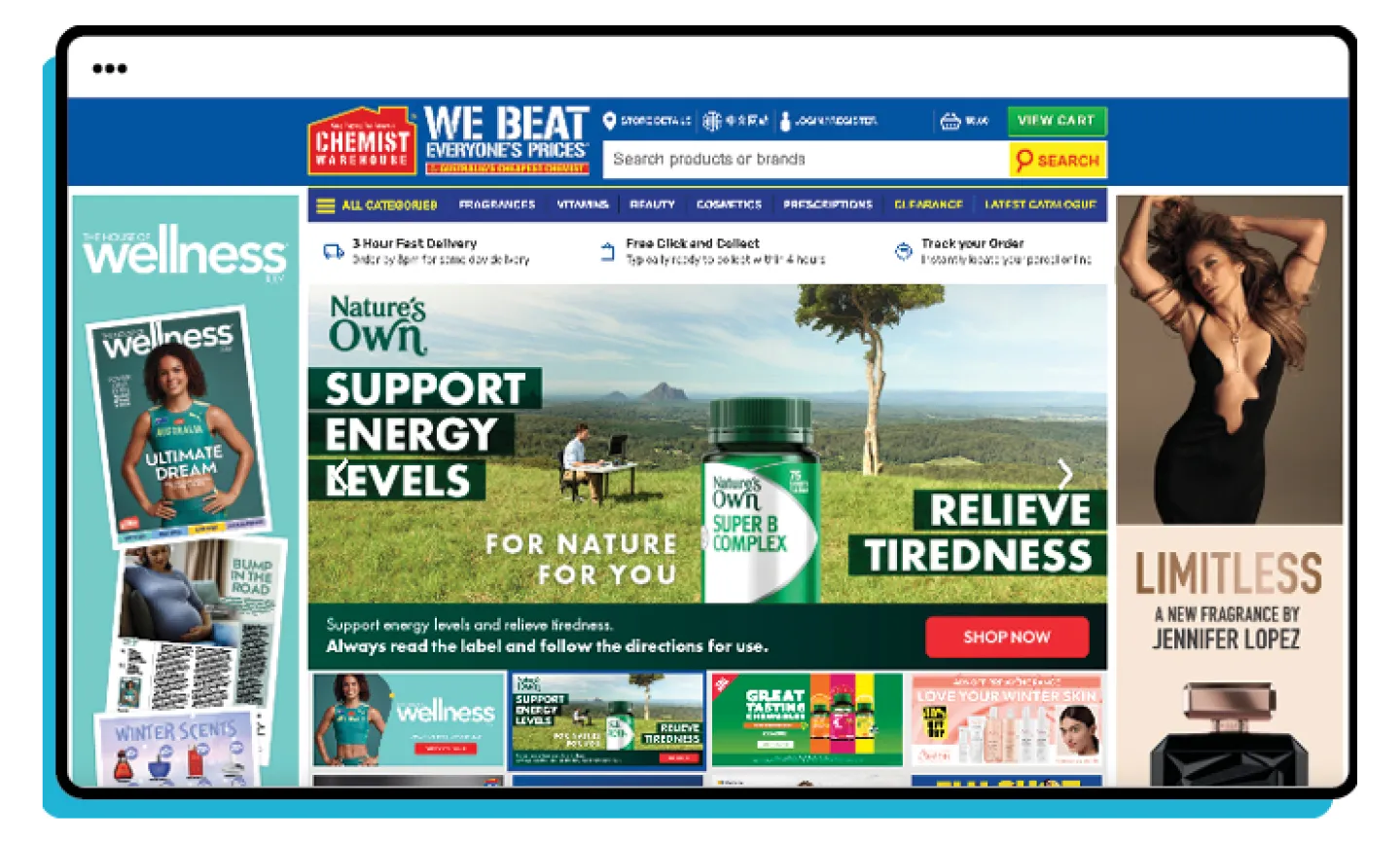
Chemist Warehouse – Large-scale ecommerce migration
Chemist Warehouse engaged Optimising to support a major platform change for one of Australia’s busiest ecommerce ecosystems. The brief was simple: modernise the experience without breaking performance.
Key outcomes
- Protected high-value category and brand rankings across millions of sessions
- Developed a robust redirect and URL strategy across complex product and content structures
- Worked alongside multiple development and internal teams to align SEO, UX, and commercial priorities
Established a framework for ongoing AI-search readiness as part of the new build.

Penfolds – Global brand, multi-market migration
Penfolds needed to modernise their site experience across key markets while protecting brand and category visibility. The project required close collaboration between brand, development, and global stakeholders.
Key outcomes
- Delivered a migration plan that balanced brand, content, and ecommerce requirements
- Re-architected site structure to better support international search and future growth
- Collaborated closely with design and development partners through discovery, build, and launch
- Monitored performance post-launch, ironing out issues quickly and preserving organic traffic
Seamless Collaboration with Your Development Team
Integrating SEO & AI Strategy Into the Build Lifecycle
The most successful migrations occur when SEO & AI is integrated into the development process from the very first sprint. We operate as an extension of your team, ensuring SEO requirements are met proactively rather than reactively.
- Join project stand-ups and sprint planning where helpful to provide real-time SEO context.
- Work inside your existing channels (Slack, Teams, email, Jira, Asana) for efficient communication.
- Provide clear, developer-friendly tickets with specific examples and acceptance criteria.
- Review templates and components early—not just waiting for the final "finished site."
- Act as a second set of eyes on site performance, accessibility, and crawlability during the build.
Your developers remain in full control of the build, but they have the SEO context needed to avoid wasting time re-doing work or fixing critical issues after the site goes live.
Comprehensive Scope: What Your Migration Must Cover
Protecting Assets, Fixing Issues, and Setting Up Growth
Our scope adjusts to suit your platform and goals, though there are common themes across most migrations. The focus is preserving what already works, fixing what holds you back, and giving the new site a cleaner base to grow from.
Technical and structure
Technical stability is non-negotiable. We focus on the parts of your setup that influence how easily search engines can crawl, understand, and index the new site.
- Redirects and URL mapping
- Indexing and crawl issues
- Canonical tags, and hreflang
- Page load and Core Web Vitals
- Site architecture and navigation
- Template structure (collections, PDP, blog, location, etc.)
- HTML and XML sitemaps
- Internal link structure
Content and relevance
Content sends the strongest signals about what each page should rank for. During a migration, we tidy up duplication, improve targeting, and make sure key pages stay aligned with demand.
- Keyword and topic research for the new structure
- On-page optimisation (titles, meta descriptions, headings)
- Content consolidation to reduce duplication
- Content gap analysis for key journeys and markets
- Image alt text and media optimisation
Authority and tracking
Protecting hard-won authority and clean data is just as important as URLs and content. We make sure you don’t lose visibility or measurement along the way.
- Backlink profile review and risk assessment
- Preservation of high-value links and pages
- Analytics, goals, events, and ecommerce tracking
- Baseline and post-launch reporting
Planning a website migration?
If you’re moving to Shopify, Commerce Tools, WordPress, Craft, AEM, a headless setup, or something more bespoke, it’s worth getting your migration plan in place early.
Get in touch and we’ll talk through your current site, your new platform, and what a low-risk migration could look like for your team.
Some of our Biggest Migration Projects





What is an SEO migration?
It's the SEO work that goes alongside a big website change: a new platform, a new URL structure, a new domain or a full redesign. The aim is to keep the rankings, links and traffic you already have, and give the new site a cleaner base to grow from.
Will we lose traffic when we migrate?
Some movement in the first few weeks is normal while Google recrawls the new site. A sustained drop almost always comes back to missing redirects, blocked pages or templates that changed without anyone checking. That's what planning prevents. We won't promise zero movement on every site, but we will tell you upfront where the risk sits.
When should we bring SEO into a migration?
Before the build starts, ideally while you're choosing the platform. URL structures and templates are cheap to change in a spec and expensive to change after launch.
How long does an SEO migration take?
It runs as long as the build, from a few months for a smaller Shopify store to well over a year for an enterprise replatform. Plan for monitoring after launch too, because some issues only show up under real traffic.
Do you build the new website?
No. We're SEO only. We work alongside your development team or build agency, and we're used to fitting into their sprints and ticketing.
Can you fix a migration that's already gone wrong?
Yes. Recovery starts by comparing the old site with the new one: which URLs lost rankings, where redirects are missing or chained, and what changed in the templates. Then we fix the issues with the biggest revenue impact first.
Which agencies in Melbourne handle technical SEO for site migrations?
We do. Optimising is a Melbourne-based, SEO-only agency that runs migrations across Shopify, WordPress, headless, Adobe Experience Manager and composable builds. We work with brands right across Australia, not just in Melbourne.